Hank Williams
- Genre:
- Country
- Meta styles:
- Honky Tonk, Traditional Country
- Styles:
- Honky Tonk, Traditional Country
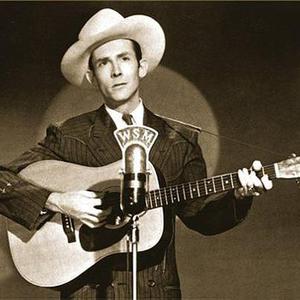
Hank Williams (September 17, 1923 ? January 1, 1953), born Hiram King Williams, was an American singer-songwriter and musician regarded as one of the most important country music artists of all time. Williams recorded 35 singles (five released posthumously) that would place in the Top 10 of the Billboard Country & Western Best Sellers chart, including 11 that ranked number one. Born in Mount Olive, Butler County, Alabama, Williams moved to Georgiana, where he met Rufus Payne, a black street performer who gave him guitar lessons in exchange for meals.
Born in Mount Olive, Butler County, Alabama, Williams moved to Georgiana, where he met Rufus Payne, a black street performer who gave him guitar lessons in exchange for meals. Payne had a major influence on Williams's later musical style. During this time, Williams informally changed his name to Hank, believing it to be a better name for country music. After moving to Montgomery, Williams began his career in 1937 when WSFA radio station producers hired him to perform and host a 15-minute program. He formed as backup the Drifting Cowboys band, which was managed by his mother, and dropped out of school to devote all of his time to his career.
When several of his band members were conscripted to military service during World War II, Williams had trouble with their replacements and started drinking heavily, causing WSFA to dismiss him. Williams eventually married Audrey Sheppard, who became his manager for nearly a decade. After recording "Never Again" and "Honky Tonkin'" with Sterling Records, he signed a contract with MGM Records. In 1948 he released "Move it on Over," which became a hit, and also joined the Louisiana Hayride radio program. In 1949, he released a cover of "Lovesick Blues," which carried him into the mainstream of music. After an initial rejection, Williams joined the Grand Ole Opry. He had 11 number one songs between 1948 and 1953, though he was unable to read or notate music to any significant degree. Among the hits he wrote were "Your Cheatin' Heart," "Hey, Good Lookin'," and "I'm So Lonesome I Could Cry."
During his last years Williams's consumption of alcohol, morphine and other painkillers severely compromised his professional and personal life. He divorced his wife and was dismissed by the Grand Ole Opry due to frequent drunkenness. Williams died suddenly in the early morning hours of New Years Day in 1953 at the age of 29. Despite his short life, Williams has had a major influence on country music. The songs he wrote and recorded have been covered by numerous artists, many of whom have also had hits with the tunes, in a range of pop, gospel, blues and rock styles.
Alabama governor Gordon Persons officially proclaimed September 21 "Hank Williams Day". The first celebration, in 1954 featured the unveiling of a monument at the Cramton Bowl, that was later placed in the grave site of Williams. The ceremony featured Ferlin Husky interpreting "I Saw the Light".[70]
Williams had 11 number one hits in his career ("Lovesick Blues," "Long Gone Lonesome Blues," "Why Don't You Love Me," "Moanin' the Blues," "Cold, Cold Heart," "Hey, Good Lookin'," "Jambalaya (On the Bayou)," "I'll Never Get Out of This World Alive," "Kaw-Liga," "Your Cheatin' Heart," and "Take These Chains from My Heart"), as well as many other top ten hits.[71]
In 1961, Williams was inducted into the Country Music Hall of Fame, and he was inducted in the Alabama Music Hall of Fame in 1985. In 1987, he was inducted in the Rock and Roll Hall of Fame under the category Early Influence. He was ranked second in CMT's 40 Greatest Men of Country Music in 2003, behind only Johnny Cash. His son, Hank Jr., was ranked on the same list. In 2004 Rolling Stone ranked him number 74 on its list of the 100 Greatest Artists of All Time. The website Acclaimedmusic, which collates recommendations of albums and recording artists, has a year-by-year recommendation for top artists. Hank Williams is ranked first for the decade 1940?1949 for his song "I'm So Lonesome I Could Cry." Many rock and roll pioneers of the 1950s, such as Elvis Presley, Bob Dylan and Jerry Lee Lewis recorded Williams songs early in their careers.
- Sort by
Pictures From Life's Other Side: The Man And His Music In Rare Recordings And Photos (2019 - Remaster) CD6
- Year:
- 2020
- Tracks:
- 19
- Bitrate:
- 163 kbps
Pictures From Life's Other Side: The Man And His Music In Rare Recordings And Photos (2019 - Remaster) CD5
- Year:
- 2020
- Tracks:
- 24
- Bitrate:
- 162 kbps
Pictures From Life's Other Side: The Man And His Music In Rare Recordings And Photos (2019 - Remaster) CD4
- Year:
- 2020
- Tracks:
- 24
- Bitrate:
- 163 kbps
Pictures From Life's Other Side: The Man And His Music In Rare Recordings And Photos (2019 - Remaster) CD3
- Year:
- 2020
- Tracks:
- 28
- Bitrate:
- 159 kbps
Pictures From Life's Other Side: The Man And His Music In Rare Recordings And Photos (2019 - Remaster) CD2
- Year:
- 2020
- Tracks:
- 24
- Bitrate:
- 162 kbps
Pictures From Life's Other Side: The Man And His Music In Rare Recordings And Photos (2019 - Remaster) CD1
- Year:
- 2020
- Tracks:
- 25
- Bitrate:
- 161 kbps
The Complete Health & Happiness Recordings
- Year:
- 2019
- Tracks:
- 49
- Bitrate:
- 320 kbps
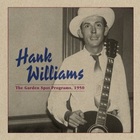
The Garden Spot Programs, 1950
- Year:
- 2014
- Tracks:
- 24
- Bitrate:
- 320 kbps
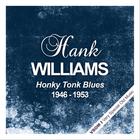
Honky Tonk Blues (1946 - 1953) (Remastered)
- Year:
- 2010
- Tracks:
- 46
- Bitrate:
- 320 kbps
The Unreleased Recordings CD3
- Year:
- 2009
- Tracks:
- 16
- Bitrate:
- 320 kbps
 Carl Smith 29
 Lefty Frizzell 21
 Ray Price 24
 Webb Pierce 37
 Cowboy Copas 6
 Ernest Tubb 77
 Faron Young 36
 George Jones 130
 Hank Thompson 29
 johnny horton 12
 ferlin husky 35
 Hawkshaw Hawkins 8
 Johnny Cash 255
 Little Jimmy Dickens 12
 Red Foley 17
 Roy Drusky 28
 The Maddox Brothers & Rose 3
 Wynn Stewart 11
 Billy Walker 28
 Charley Pride 44
 Charlie Walker 4
 Conway Twitty 73
 Flatt & Scruggs 27
 hank locklin 37
 Harlan Howard 6
 Jerry Lee Lewis 107
 Roy Orbison 84
 Tex Williams 8
 Buck Owens 119
 Curtis Potter 4
 Jean Shepard 34
 Kitty Wells 44
 Porter Wagoner 64
 Woody Guthrie 21