Top tracks
Listeners also bought
Other World Traditions albums
Other Traditional albums
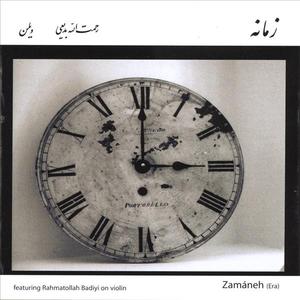
Put your hands on the remote! browse music »Zamaneh (Era) by Parisa, Rahmatollah Badiyi
view larger image
fave it World Traditions | Traditional
8 tracks | 56 minutes
Released Sep 2002
on Amity Records
Click
for a 30-second preview. All tracks are 192kbps high fidelity sound quality. Protected WMA $0.77 or unprotected MP3 $0.88.
listen album 30sec. shuffle buy CD review album promote album
- sample "DOWNLOAD" 06:17 Mathnavi BUY MP3 06:17 Mathnavi "GIFT MP3" 06:17 Mathnavi
- sample "DOWNLOAD" 12:31 Zamaneh BUY MP3 12:31 Zamaneh "GIFT MP3" 12:31 Zamaneh
- sample "DOWNLOAD" 09:28 Ya-ali'u'ala BUY MP3 09:28 Ya-ali'u'ala "GIFT MP3" 09:28 Ya-ali'u'ala
- sample "DOWNLOAD" 07:08 Mathnavi BUY MP3 07:08 Mathnavi "GIFT MP3" 07:08 Mathnavi
- sample "DOWNLOAD" 01:54 Chahar Midrab BUY MP3 01:54 Chahar Midrab "GIFT MP3" 01:54 Chahar Midrab
- sample "DOWNLOAD" 07:24 Poems Dr.y. Afroukhtih and Tahirih BUY MP3 07:24 Poems Dr.y. Afroukhtih and Tahirih "GIFT MP3" 07:24 Poems Dr.y. Afroukhtih and Tahirih
- sample "DOWNLOAD" 05:30 Ma Asheghan-i-ruy-i-tu BUY MP3 05:30 Ma Asheghan-i-ruy-i-tu "GIFT MP3" 05:30 Ma Asheghan-i-ruy-i-tu
- sample "DOWNLOAD" 06:27 Chahargah BUY MP3 06:27 Chahargah "GIFT MP3" 06:27 Chahargah
Traditional/Classical Persian music including Chahagah, Mathnavi, Chaharmezrab (violin and piano) with one Turkish tune.
Bio / Background
Album Description
This is an album of traditional/classical Persian with one Turkish tune. It features the famous Persian musician, Rahmatollah Badiyi, on violin and Parisa, performing the vocals and piano. Other instruments used are guitar, santur and tunbak, a Persian drum. The lyrics include selections from the Baha'i writings.
About the Artists
Rahmatollah Badiyi was born in 1936 in Kashan, Iran. At the age of five he began to play the nay, a Persian flute and at age seven, he started playing violin. At age eleven, he entered the Tehran Conservatory to study classical music with the famous Abol-Hasan Saba who would be his mentor for the next five years. He has collaborated with various national orchestras as a concertmaster and soloist for more than twenty-three years. During this period he worked as a professor in the National Conservatory of Music in Iran's capital, Tehran.
↓ more ↓In addition to the violin, Badiyi plays the kamoncheh and ghichak, both traditional stringed instruments of Iran. He received an honorary doctorate from the Ministry of Art and Culture of Iran, the highest possible recognition for his work in music.
Parisa Badiyi was born in Tehran. As a child she began playing the piano and at the age of nine she entered the Music Conservatory of Tehran where she studied classical violin performance. In 1979, Parisa and her family moved to Holland where she continued her musical education. She graduated as an instructor in the Suzuki Method. Parisa has studied classical Persian music under her father, Rahmatollah Badiyi. Her warm, touching voice is well suited to traditional Persian singing (avaz), a skill she has mastered under the guidance of her father. Among her honors was that she was accorded first violinist in the orchestra for the Second Baha'i Congress in New York City in 1992. Parisa now resides in Germany where she teaches piano and violin at the Culture and Arts Center.
↑ less ↑