Top tracks
Listeners also bought
Other World Fusion albums
Other African albums
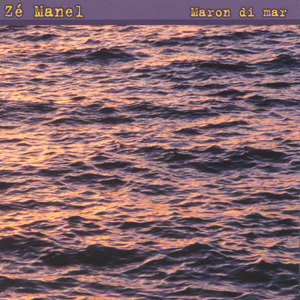
Put your hands on the remote! browse music »Maron di mar by Ze Manel
view larger image
fave it World Fusion | African
11 tracks | 49 minutes
Released May 2001
on Cobiana Records, Inc.
Click
for a 30-second preview. All tracks are 192kbps high fidelity sound quality. Protected WMA $0.77 or unprotected MP3 $0.88.
listen album 30sec. shuffle buy CD review album promote album
- sample lyrics "DOWNLOAD" 04:03 Afrika Unite lyrics BUY MP3 04:03 Afrika Unite lyrics "GIFT MP3" 04:03 Afrika Unite
- sample lyrics "DOWNLOAD" 05:07 Maron Di Mar lyrics BUY MP3 05:07 Maron Di Mar lyrics "GIFT MP3" 05:07 Maron Di Mar
- sample lyrics "DOWNLOAD" 06:40 Tchiko Te lyrics BUY MP3 06:40 Tchiko Te lyrics "GIFT MP3" 06:40 Tchiko Te
- sample lyrics "DOWNLOAD" 05:19 Immigre lyrics BUY MP3 05:19 Immigre lyrics "GIFT MP3" 05:19 Immigre
- sample lyrics "DOWNLOAD" 05:03 Siko Na Bankule lyrics BUY MP3 05:03 Siko Na Bankule lyrics "GIFT MP3" 05:03 Siko Na Bankule
- sample lyrics "DOWNLOAD" 04:58 Na Kaminho Di Luta lyrics BUY MP3 04:58 Na Kaminho Di Luta lyrics "GIFT MP3" 04:58 Na Kaminho Di Luta
- sample lyrics "DOWNLOAD" 05:07 Pubis Ka Burro lyrics BUY MP3 05:07 Pubis Ka Burro lyrics "GIFT MP3" 05:07 Pubis Ka Burro
- sample lyrics "DOWNLOAD" 03:05 Safinte Na Baloba lyrics BUY MP3 03:05 Safinte Na Baloba lyrics "GIFT MP3" 03:05 Safinte Na Baloba
- sample lyrics "DOWNLOAD" 04:31 Bu Fidjo Femia lyrics BUY MP3 04:31 Bu Fidjo Femia lyrics "GIFT MP3" 04:31 Bu Fidjo Femia
- sample lyrics "DOWNLOAD" 04:23 Divine Fire lyrics BUY MP3 04:23 Divine Fire lyrics "GIFT MP3" 04:23 Divine Fire
- sample lyrics "DOWNLOAD" 01:21 Ami Fidjo Di Tchon lyrics BUY MP3 01:21 Ami Fidjo Di Tchon lyrics "GIFT MP3" 01:21 Ami Fidjo Di Tchon
West African polyrhythms in dialogue with the world. Hints of jazz and blues meld with the African root in a contemporary sound. Poetically soft lyrics sung in Kriol, the Portuguese Creole of Guinea-Bissau
Editorial review
Z? Manel is the biggest and possibly the most important contemporary musician to come out of the African country of Guinea-Bissau. Originally the drummer with Mama Djombo, one of the country's most popular groups, he was forced to flee the country after his 1983 solo album, Tustumunhus di Aonti, whose politically acute lyrics put his life in danger. Maron di Mar is his return to his homeland, and it's equally thoughtful but a work of stunning maturity. With a voice that slides gorgeously in and out of the upper registers, his compositions also feature his wonderful multi-instrumental playing, with "Immigr?" (not the Youssou N'Dour song of that title) an absolute quiet standout. The rhythms throughout float easily across the album, the arrangements airy and easy but still quite involving. To put it simply, this is one of the best and most accessible albums to come out of West Africa in a long time, making you wonder just why Z? Manel isn't the household name other African performers are. He has everything going for him: the voice, the instrumental chops, and the songwriting ability that shows itself so sharply on pieces like "Safinte na Baloba" and the title cut. Upon its release, this immediately became the biggest disc in Guineau-Bissau. It's not hard to understand why. ~ Chris Nickson, All Music Guide
Bio / Background
ZE MANEL
After years of political and musical exile,
"the talisman of Guinean music returns
to the origins on a Sea wave"
-Diário de Bissau
"...politically sharp, poetically soft,
guitars mourning without pedal effects,
...and Manel's terrific voice."
-The Rough Guide to World Music
In the tumultuous 60's and 70's, as independence from colonial rule was won across Africa, there emerged many expressions of cultural revolution. In Guinea-Bissau, it was music. Deep-rooted rhythms and folklore were re-interpreted in modern arrangements that inspired, mobilized, and unified. The new music featured electric guitars, brass, and lyrics sung in Kriol (a synthesis of several African languages and Portuguese), the language of the people. Zé Manel is a foundational figure of that movement.
Manel was born in Bissau, the capital city, on May 22, 1957. At age six, he formed a band to play music at boy scout camp.
↓ more ↓Soon the band was playing weddings, baptisms and birthday parties, and its members took their craft so seriously that some were forced to leave. By age seven, young Zé, playing drums and acoustic guitar, had become the main attraction of this band, named Super Mama Djombo after the female spirit of a sacred offering place. When Guinea-Bissau won its independence from Portugal years later, Orchestra Mama Djombo emerged to sing the victory.
In the years that followed, Kriol music became the bridge that brought people to their national identity. "Independence felt like people taking over their own house," recalls Manel. "After independence, life was a party, not a struggle." In that euphoric atmosphere, Mama Djombo acquired the status of national group. They often traveled with the first President Luís Cabral, representing the new nation through music. In 1978 they were flown to Cuba to mark the new musical identity "present" at the 11th Youth Music Festival. The group filled a Senegalese stadium, where the crowds literally broke down the doors to hear them play. It is said that whenever a Mama Djombo song came on the radio during lunch, people would get up and dance-and then return to their meal. It seemed an ascendancy that would never end.
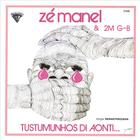
The pressures of success-and ideological conflict-brought the end of the band in the mid 80's. In 1982, Zé released his first solo album Tustumunhos di Aonti (Yesterday's Testimony), which sounded the alarm over the formation of a new, repressive ruling class. The album was a national event (people in Guinea-Bissau today still sing the songs from this soulful, relevant album), but the political environment was heating up and Manel's fans were concerned for his safety. It was becoming increasingly easy to "disappear." He was given a scholarship to study abroad-one of the more pleasant means of removing voices of dissidence.
Manel left Guinea-Bissau for a Portuguese conservatory to study classical music, opera and piano. Upon completion of his studies, Zé played for a year on the Paris scene, then moved to Oakland, California to equip a studio.
Maron di mar marks Zé's return to Guinea-Bissau for the first time since Tustumunhos. The album has touched a nerve with people there, and Manel is once again a national hero. The struggle for dignity and new possibilities that drove the revolution continues today, as a society strives to affirm democracy and identity. Thanks to Zé Manel, Kriol music once again aids that fight, providing a counter-narrative to potential constitutional fictions.
↑ less ↑