Top tracks
Listeners also bought
Sick of Love by Luca
Other Americana albums
Other Roots Rock albums
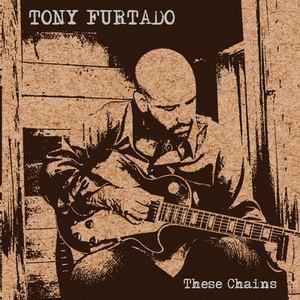
Put your hands on the remote! browse music »These Chains by Tony Furtado
view larger image
fave it Americana | Roots Rock
13 tracks | 50 minutes
Released Jul 2004
on Funzalo Records
Click
for a 30-second preview. All tracks are 192kbps high fidelity sound quality. Protected WMA $0.77 or unprotected MP3 $0.88.
listen album 30sec. shuffle buy CD review album promote album
- sample lyrics "DOWNLOAD" 03:55 These Chains lyrics BUY MP3 03:55 These Chains lyrics "GIFT MP3" 03:55 These Chains
- sample lyrics "DOWNLOAD" 04:21 More & More lyrics BUY MP3 04:21 More & More lyrics "GIFT MP3" 04:21 More & More
- sample lyrics "DOWNLOAD" 03:33 The Good Stuff lyrics BUY MP3 03:33 The Good Stuff lyrics "GIFT MP3" 03:33 The Good Stuff
- sample lyrics "DOWNLOAD" 03:12 Standing In The Rain lyrics BUY MP3 03:12 Standing In The Rain lyrics "GIFT MP3" 03:12 Standing In The Rain
- sample lyrics "DOWNLOAD" 04:52 Swayback Jim lyrics BUY MP3 04:52 Swayback Jim lyrics "GIFT MP3" 04:52 Swayback Jim
- sample lyrics "DOWNLOAD" 04:03 The Prisoner lyrics BUY MP3 04:03 The Prisoner lyrics "GIFT MP3" 04:03 The Prisoner
- sample lyrics "DOWNLOAD" 04:52 Doc's Bogg lyrics BUY MP3 04:52 Doc's Bogg lyrics "GIFT MP3" 04:52 Doc's Bogg
- sample lyrics "DOWNLOAD" 03:24 Oh Father Mine lyrics BUY MP3 03:24 Oh Father Mine lyrics "GIFT MP3" 03:24 Oh Father Mine
- sample lyrics "DOWNLOAD" 04:39 Bet On The Whitehorse lyrics BUY MP3 04:39 Bet On The Whitehorse lyrics "GIFT MP3" 04:39 Bet On The Whitehorse
- sample lyrics "DOWNLOAD" 02:55 Brand New Goodbye Song lyrics BUY MP3 02:55 Brand New Goodbye Song lyrics "GIFT MP3" 02:55 Brand New Goodbye Song
- sample lyrics "DOWNLOAD" 04:11 Need A Friend lyrics BUY MP3 04:11 Need A Friend lyrics "GIFT MP3" 04:11 Need A Friend
- sample lyrics "DOWNLOAD" 04:08 Take A Look lyrics BUY MP3 04:08 Take A Look lyrics "GIFT MP3" 04:08 Take A Look
- sample lyrics "DOWNLOAD" 02:32 One Too Many Mornings lyrics BUY MP3 02:32 One Too Many Mornings lyrics "GIFT MP3" 02:32 One Too Many Mornings
An inspired player who has gained respect through his impressive guitar playing and world class bango playing. Mixes modern day music with traditional, creating a sound distinctly his.
Editorial review
On These Chains, renowned instrumentalist Tony Furtado has turned the tables on his own career. Long heralded as one of the finest banjoists progressive bluegrass ever spawned, and highly regarded for his inventive, dizzying, slide guitar playing as well, he's added "singer/songwriter" to his resume on this set. Sure, he's written songs before, and he's no stranger to singing. But until now, Furtado has been regarded primarily as an instrumentalist who indulged other muses. Furtado wrote nine of the 13 tracks here, and collaborated on three others. In addition, there is only one instrumental on the record. Producer and bassist Dusty Wakeman (Lucinda Williams, Dwight Yoakam) assembled a smoking band for the sessions, including drummer Jim Christie, Skip Edwards on keyboards, drummer/percussionist Michael Tempo of the Bonedaddys, and Williams' guitarist Doug Pettibone. Vocalist Gia Ciambotti from Badly Drawn Boy adds backing touches here, as do Kat Maslich and Peter Adams from Eastmountainsouth. The number of styles here is dizzying. The set opens with the title track, a burning electric blues rocker. The cut time shuffle and snarling blend of electric and acoustic guitars underscores the protagonist's tale of terror and darkness. Furtado's banjo enters the fray on "Good Stuff," a rumbling, bass heavy rocker that walks the line between country, bluegrass, and explosive hard rock. But there are introspective moments here too, such as the beautiful "Standing in the Rain," a collaboration with Jules Shear. Driven by an organic weave of acoustic and electric guitars, it's a vulnerable testament of acceptance and redemption wrapped in a love song. "The Prisoner," written with NRBQ's Al Anderson, is a simple, moving country tune; it's wide open and sunny and moving and could be covered by virtually any of the hat kids on CMT, but the restless soul in Furtado's and Anderson's tune is captured in the singer's yearning tenor. The album closes with a moving version of Bob Dylan's "One Too Many Mornings." Shear offers a deeply moving harmony vocal to underscore the sadness and resignation in Furtado's vocal. It's a fitting end to an album that was a long time in coming. Furtado has been full of surprises since 1997's Roll My Blues Away, the album that seemingly began this labyrinthine journey. This is an excellent stop on the road to whatever comes next. Here's hoping he explores it further. ~ Thom Jurek, All Music Guide
Bio / Background
TONY FURTADO
Tony Furtado doesn't like to stay in one place for too long. That applies not just to the places he's called home - ranging from Pleasanton, Calif., in the East Bay, where he grew up, to D.C., Boulder, Portland and now L.A. - but also to his restless artistic spirit. After making a name for himself as a 19-year-old banjo prodigy, Furtado, finding the instrument too limiting for his rapidly expanding sensibility, developed himself into an equally skillful slide guitarist. Later, he realized he had more to say than he could fully express by manipulating strings with his fingers and bottleneck, which has led to his surprising reinvention as a full-blown singer/songwriter - and this is one extreme makeover that seems utterly natural.
The initial evidence of Furtado's stunning metamorphosis is These Chains (released July 27 on Funzalo Records).
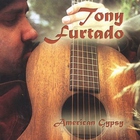
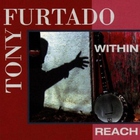
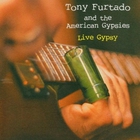
↓ more ↓While his previous LP, 2003's Live Gypsy, was totally focused on performance, the new LP is all about songs, with Furtado's engaging tenor featured on 12 of the 13 tracks. Previous Furtado albums have featured occasional vocals, but until recently they weren't sung by Tony. Allison Krauss sang the Beatles' "I Will" on his second effort, 1992's Within Reach, and on later records he turned to blues artist Kelly Joe Phelps before finally introducing his own voice on the traditional "Cypress Grove," which turned out to be a highlight of 2001's Tony Furtado Band. The subsequent American Gypsy (2002) and Live Gypsy contain a handful of Furtado vocals, but never before in his 15-year recording career has he sung his own material. Better late than never, it turns out.
The album boasts no fewer than nine Furtado-penned songs - his first-ever compositions with lyrics - revealing Furtado as a writer of considerable stylistic breadth and emotional depth. The material includes collaborations with legendary songsmith/artist Jules Shear, country auteur Jim Lauderdale and longtime NRBQ guitarist Al Anderson. These Chains is rounded out by the original instrumental "Doc's Bogg," an interpretation of the traditional "Bet on the White Horse," a cover of "Brand New Goodbye Song" (which, as Tony explains in the lyric sheet, he learned for a Waylon Jennings tribute show) and a poignant duet with Shear on the Bob Dylan classic "One Too Many Mornings."
Fundamentally, these songs and performances seem to draw on the legacy of the Southern California-based singer-songwriter movement of the early '70s, which, like Furtado's own creative impulse, was a personalized outgrowth of traditional folk music. This connection is most readily apparent on "Need a Friend," the Lauderdale collaboration, on which Furtado manages to simultaneously play the roles made famous by Jackson Browne and his brilliant accompanist, David Lindley (a musician with whom Tony feels a kinship, since both started as banjo players before becoming slide specialists). Furtado's scintillating bottleneck work on the track dramatically displays his transition from fleet-fingered picker to song-serving player.
Other highlights include the cinematic "More and More," the rousing drinking song "The Good Stuff," the road-weary "The Prisoner" (co-written with Anderson), the shimmering art-pop of "Standing in the Rain" (the Shear collaboration) and the propulsive "These Chains," inspired by the prison work songs recorded for posterity by archivist Alan Lomax.
The album's most intensely personal song is "Oh Father Mine," which Tony penned after learning his dad had been diagnosed with cancer. "I didn't know if he was going to live or not," he recalls, "and that song just sort of popped out. Writing it was definitely cathartic for me." Happily, Furtado's father made a full recovery. He's joined on the track by the acclaimed neo-folk duo eastmountainsouth.
The Furtado original "Swayback Jim," about an old nag who dreams about beating the great thoroughbred Man o' War in a race, sounds just as ancient as the equestrian-themed folk song "Bet on the White Horse." Like the earlier "Cypress Grove," "Swayback Jim" is a stripped-down rave-up featuring just Tony's acoustic slide and drums, and it rocks as hard as anything the White Stripes have come up with while telling a captivating tale. He uses the same down-to-the-bone setup for "Brand New Goodbye Song." "I wanted something on the record that had another dimension to it," he explains, "something that was like what I was doing before, but also what I do in my solo shows."
Furtado had some expert help in bringing the songs of These Chains to life. Producer/bassist Dusty Wakeman (Lucinda Williams, Dwight Yoakam, Anne McCue) assembled a killer crew consisting of drummer Jim Christie and guitarist Doug Pettitbone of Lucinda's current band, veteran keyboardist Skip Edwards, percussionist Michael Tempo (Bonedaddies) and backing vocalist Gia Ciambotti (Badly Drawn Boy), and they match Furtado's urgency note for note while locating the essence of each song. The music wasn't fussed over - fussing isn't in the makeup of either Furtado or Wakeman - with the bulk of the album cut straight off the floor by the full band.
This project was a long time coming - a lifetime, in fact. Furtado grew up listening to FM radio at a time when eclecticism ruled - he has indelible memories of riding around in his mother's Mustang as a 5-year-old with the radio cranking rock, soul, blues, folk and even some jazz - so he assimilated a wide range of styles early on. "I've always been into playing a lot of different types of music," he says. "When I was mainly playing banjo, I would study everything from old Charlie Parker records to traditional Irish music to trying to figure out ways to play blues on the banjo."
After being blown away by Ry Cooder's 1974 classic Paradise and Lunch - which led him to Delta blues artists like Blind Willie Johnson and Fred McDowell - Furtado took up the slide guitar, which made its first recorded appearance on his 1997 album Roll My Blues Away, featuring mostly original compositions in the classic acoustic Mississippi style. But he wasn't finished absorbing and assimilating - not by a long shot.
"When I started playing slide guitar," Furtado says, "I realized that I didn't have the knowledge of rock and pop, as well as the real traditional stuff. So the same time that I was woodshedding on slide, I was buying tons of albums and finding out exactly what I loved. I remember buying a bunch of Jackson Browne albums, David Lindley bootlegs, a lot of Tom Petty, John Hiatt. I was also listening to Richard Thompson and Bruce Cockburn, really good singer/songwriter/guitar players. It took a long time for it to start to internalize."
But internalize it did, as These Chains makes abundantly clear. There's no telling where Furtado's nomadic muse will lead him from here - who knows, she might try to convince him to settle down for a spell in the fertile territory he's just claimed - but either way, this wide-ranging artist will be hard-pressed to top his latest accomplishment.
↑ less ↑