Top tracks
Listeners also bought
Other Folk Blues albums
Other Acoustic Blues albums
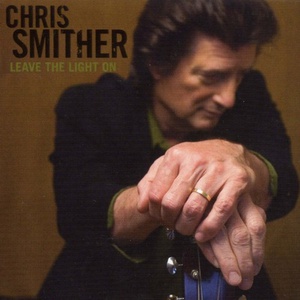
Put your hands on the remote! browse music »Leave The Light On by Chris Smither
view larger image
fave it Folk Blues | Acoustic Blues
12 tracks | 44 minutes
Released Oct 2006
on Signature Sounds Recordings
Click
for a 30-second preview. All tracks are 192kbps high fidelity sound quality. Protected WMA $0.77 or unprotected MP3 $0.88.
listen album 30sec. shuffle buy CD review album promote album
- sample lyrics "DOWNLOAD" 02:55 Open Up lyrics BUY MP3 02:55 Open Up lyrics "GIFT MP3" 02:55 Open Up
- sample lyrics "DOWNLOAD" 03:47 Leave The Light On lyrics BUY MP3 03:47 Leave The Light On lyrics "GIFT MP3" 03:47 Leave The Light On
- sample lyrics "DOWNLOAD" 04:33 Shillin For The Blues lyrics BUY MP3 04:33 Shillin For The Blues lyrics "GIFT MP3" 04:33 Shillin For The Blues
- sample lyrics "DOWNLOAD" 04:26 Seems So Real lyrics BUY MP3 04:26 Seems So Real lyrics "GIFT MP3" 04:26 Seems So Real
- sample lyrics "DOWNLOAD" 03:05 Origin Of Species lyrics BUY MP3 03:05 Origin Of Species lyrics "GIFT MP3" 03:05 Origin Of Species
- sample lyrics "DOWNLOAD" 04:29 Cold Trail Blues lyrics BUY MP3 04:29 Cold Trail Blues lyrics "GIFT MP3" 04:29 Cold Trail Blues
- sample lyrics "DOWNLOAD" 02:37 Diplomacy lyrics BUY MP3 02:37 Diplomacy lyrics "GIFT MP3" 02:37 Diplomacy
- sample lyrics "DOWNLOAD" 04:39 Father's Day lyrics BUY MP3 04:39 Father's Day lyrics "GIFT MP3" 04:39 Father's Day
- sample lyrics "DOWNLOAD" 05:22 Visions Of Johanna lyrics BUY MP3 05:22 Visions Of Johanna lyrics "GIFT MP3" 05:22 Visions Of Johanna
- sample lyrics "DOWNLOAD" 03:29 Blues In The Bottle lyrics BUY MP3 03:29 Blues In The Bottle lyrics "GIFT MP3" 03:29 Blues In The Bottle
- sample lyrics "DOWNLOAD" 03:12 John Hardy lyrics BUY MP3 03:12 John Hardy lyrics "GIFT MP3" 03:12 John Hardy
- sample lyrics "DOWNLOAD" 01:32 John Hardy reprise lyrics BUY MP3 01:32 John Hardy reprise lyrics "GIFT MP3" 01:32 John Hardy reprise
A master of acoustic blues, Chris Smither is also a remarkable songwriter....Bonnie Raitt calls him "my Eric Clapton".
Editorial review
Chris Smither doesn't do much here that he hasn't done throughout his long career, but there's no crime in consistent excellence. That career, launched during the Boston folk revival of the late '60s, has now encompassed a dozen albums, with a lengthy hiatus throughout most of the '70s and '80s as Smither battled the demons of alcoholism and addiction. He re-emerged in the early '90s as a wizened troubadour, equally adept at self-deprecating humor and heartbreaking balladry, and he continues that tradition on Leave the Light On. As is typical of all his releases, the album's 12 songs split the difference between folk and blues. Smither's propulsive acoustic fingerpicking, heavily influenced by bluesman Lightnin' Hopkins, is as unobtrusively impressive as ever. He's not flashy, but he plays exactly what fits each song. Multi-instrumentalist Tim O'Brien and neo-gospel acolytes Ollabelle contribute fine, understated accompaniment, but Smither is the real star here, wrapping his raspy baritone croon around his increasingly pointed, literate songs of hope and regret. Smither has a knack for selecting exemplary covers, and the sampling on Leave the Light On is no exception. Peter Case's forlorn "Cold Trail Blues," mentor Hopkins' harrowing "Blues in the Bottle," and Bob Dylan's "Visions of Johanna" (offered as a slow, meditative waltz) fit the ruminative, downcast mood perfectly. But his originals hold their own with the stellar covers, and, if anything, he continues to improve as a songwriter. The title track is an unapologetic refusal to grow old and quietly fade away, while "Shillin' for the Blues" probes the kind of 3:00-a.m.-stare-at-the-ceiling introspection that is equal parts despair and resolute conviction to carry on. "Origin of Species" is a hilarious sendup of the biblical creation story and the theory of evolution, while the rollicking "Diplomacy" is one of the few protest anthems of the Bush era that isn't full of sputtering, inarticulate invective, and that actually exhibits wit and insight: "We got some freedom, we got the iPod store/We got the savior, you couldn't ask for more/Take it or leave it, it's the deal of the day/And if you leave it, you get it anyway." That kind of incisive commentary fuels the entire album, and if the barbs seem more pointed than usual, perhaps they reflect the impatience of a man who has never suffered fools gladly, and who is doing some of his best work in what by all rights ought to be the twilight of his career. This very fine release is proof, if any is needed, that the light is still on, and shining very brightly. ~ Andy Whitman, All Music Guide
Bio / Background
Some artists continually reinvent themselves; others identify their muse early on and spend their careers single-mindedly pursuing it, remaining recognizably themselves through a career-long process of refinement, growth and discovery. Chris Smither belongs to the latter group. Leave the Light On, Smither’s masterful twelfth album — the first he’s released on his own Mighty Albert label — stands as the quintessence of his life’s work while throwing in some new wrinkles that reflect where he’s been and what he’s encountered since the last time around. But Smither’s central theme as he enters his 60s is clearer than ever.
“The last three or four records I’ve done are mostly talking about the big questions — life, death, love and… not love — and where the whole thing’s going,” he says.
↓ more ↓This new “fistful of tunes,” as he calls it, finds Smither once again in a contemplative mood, examining his thought processes on “Open Up,” struggling to distinguish between self-deception and truth on “Seems So Real” and seeking the most fundamental kind of closure on “Father’s Day.” No, Leave the Light On is not a party record.
“Since I started recording again around 20 years ago [22, actually], I’ve been writing about the same sorts of things; it’s just about my own growing perception of it, and how clear can I make it?” Smither explains. “I guess I’m making it clearer, because people don’t often ask me what the songs are about anymore. It’s a process of engagement. When you write a song, you’ve got three or four minutes to get ahold of somebody, and if they can remember one phrase or line when they walk away from it, you’ve won. And I think I’ve accomplished that.”
What is immediately recognizable to anyone who has encountered Smither on record or in live performance during the course of the last four decades are his been-there, done-that voice and the crystalline, wordlessly eloquent sounds of his fingerpicked acoustic guitar. Familiar, too, are the writer/artists whose songs Smither has selected to intermingle with his own. These include Mississippi John Hurt, whose “Blues in the Bottle” — a striking showcase for Smither’s approach to the acoustic guitar — is drawn from Blues in My Bottle, the album that inspired the New Orleans-born, Boston-based artist to begin performing in the 1960s; and his contemporary Bob Dylan, from whose vast oeuvre the artist this time has chosen the Blonde on Blonde linchpin “Visions of Johanna.”
The new elements introduced on Leave the Light On — the second album produced by Smither’s cohort, David “Goody” Goodrich, after 2003’s Train Home — provides the new recording with its particular flavor. On hand is young neo-gospel quartet Ollabelle, who bring a complementary loveliness to Smither’s “Seems So Real” and additional resonance to the traditional “John Hardy.” The renowned roots musician Tim O’Brien plays mandolin and fiddle all over the record, as well as harmonizing with Smither, Sean Staples and Anita Suhanin on the lilting title track for a billowing blend that evokes Southern California circa 1972. Atypically, he tackles topical themes on “Origin of Species,” which he says is “making fun of dummies,” and the edgily political “Diplomacy,” harkening back to his roots in the ’60s folk scene. Also different is Smither’s bold and surprising decision to arrange “Visions of Johanna” in 6/8 time (he credits his friend Steve Tilston, an English artist, for the suggestion) that results in a track of otherworldly beauty.
Smither considers himself a performer first and foremost, and the fashioning of new material for each album brings added interest to both his fans and himself. “New tunes not only have a freshness of their own, but they also freshen up all the old material as well — they cast a new light on it,” he points out. In this sense, each album results in an act of recontextualization of his entire body of work. “It’s an interesting process,” he confirms. “Not for a minute do I believe the songs come from any place but inside of me, but at the same time there’s an otherness to them that continually surprises me. Why does it take so long for them to become part of my conscious self? It’s an interesting problem, but I’ve talked to enough writers to realize I’m far from unique in that respect.”
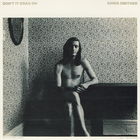
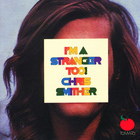
After coming on the radar in 1970 with the well-received debut album I’m a Stranger Too! and the similarly lauded 1972 follow-up, Don’t It Drag On, Smither didn’t release another record for more than a decade. “Everybody has good patches and bad patches,” he says. “I was basically drunk for 12 years, and somehow I managed to climb out of it; I don’t know why. Why did I get well when so many other people don’t? It had nothing to do with any virtue on my part; if I were Christian, I’d call it grace. I just got lucky. Mostly you just get tired of it. So when you get sufficiently tired of it, you either descend into utter obliteration or you get out, and so I got out.”
Smither says he recognizes the young artist on the front end of his long struggle from his present perspective. “He got sidetracked, and he learned a lot, but it’s definitely the same guy,” he says. “The other interesting thing is that I had to go through all the horrible stuff to get where I am now. It’s part and parcel of the animal that’s walking around today. It’s unfortunate that I stayed so unproductive for so long, but at the same time, I couldn’t write the kind of stuff that I write now if I hadn’t gone through it. I wouldn’t realize what it is to be a human — not really. I might think I did, but it wouldn’t be the same.”
When asked about his career-long predilection for mixing in outside songs with his own material, Smither says, “This may sound a little self-important, maybe, but I like to hold these things up and say, ‘These are the people I consider my peers, and my stuff stands up to this. This is what I do, and this is where I come from.’”
The four non-originals on Leave the Light On — also including Peter Case’s “Cold Trail Blues” — indicate where Chris Smither comes from; the eight new songs he’s fashioned show where this deeply soulful artist is now, and what lies ahead. The particular opening into the universal, delivered by a knowing voice and filigreed by tasty licks — you can’t ask for more than that from an album.
↑ less ↑